
JIC Fitting Chart: 37° Flare Thread Sizes and Dash Numbers
Updated · 7 min read
Use this JIC hydraulic fitting chart to organise measurements for a replacement hose assembly or adapter. Match the thread diameter, pitch and sealing seat together; a dash number or a nut that starts turning is not enough to identify a connection.
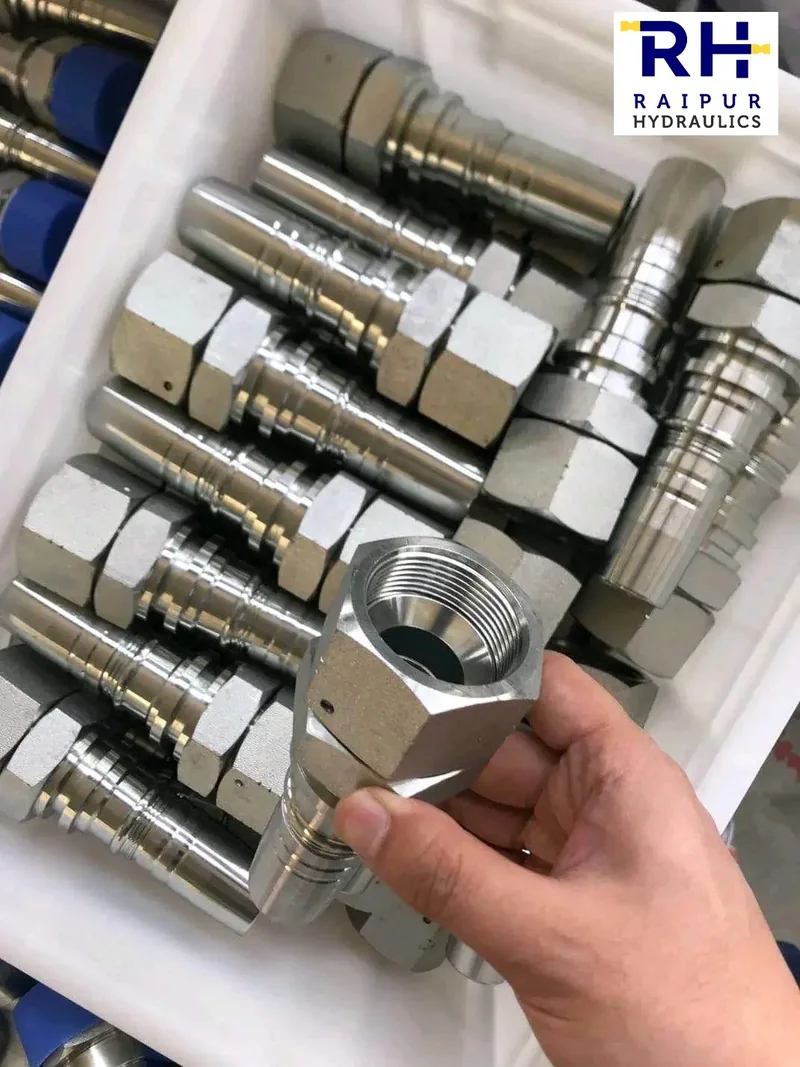
What Is a JIC Fitting?
JIC is the common name for a 37° flare connection in the SAE J514 family, with SAE J514-1 covering the flared tube-fitting interface. ISO 8434-2 also covers 37° flared connectors. The seat is 37° from the connection centreline, equivalent to a 74° included cone angle. Straight UN/UNF threads draw the mating parts together; the standard JIC joint seals through metal-to-metal contact at the flare, not along the threads.
Keep the seat angle separate from the thread profile. Two fittings can have matching thread sizes but different sealing surfaces. Identify both halves of the joint, including any adapter already installed on the machine.
JIC Fitting Sizes, Threads and Dash Numbers
Read across from the tube-fitting dash number. TPI means threads per inch. The thread-size entry names the nominal major diameter and TPI; it does not describe the hose bore. These dimensions are an identification reference, not a pressure-rating table.
| Dash | Tube OD (inch) | Tube OD (mm) | Thread Size (UN/UNF) | Nominal Thread Major Ø (inch) | Nominal Thread Major Ø (mm) | TPI |
|---|---|---|---|---|---|---|
| -2 | 1/8 | 3.18 | 5/16-24 UNF | 5/16 | 7.94 | 24 |
| -3 | 3/16 | 4.76 | 3/8-24 UNF | 3/8 | 9.53 | 24 |
| -4 | 1/4 | 6.35 | 7/16-20 UNF | 7/16 | 11.11 | 20 |
| -5 | 5/16 | 7.94 | 1/2-20 UNF | 1/2 | 12.70 | 20 |
| -6 | 3/8 | 9.53 | 9/16-18 UNF | 9/16 | 14.29 | 18 |
| -8 | 1/2 | 12.70 | 3/4-16 UNF | 3/4 | 19.05 | 16 |
| -10 | 5/8 | 15.88 | 7/8-14 UNF | 7/8 | 22.23 | 14 |
| -12 | 3/4 | 19.05 | 1-1/16-12 UN | 1 1/16 | 26.99 | 12 |
| -14 | 7/8 | 22.23 | 1-3/16-12 UN | 1 3/16 | 30.16 | 12 |
| -16 | 1 | 25.40 | 1-5/16-12 UN | 1 5/16 | 33.34 | 12 |
| -20 | 1 1/4 | 31.75 | 1-5/8-12 UN | 1 5/8 | 41.28 | 12 |
| -24 | 1 1/2 | 38.10 | 1-7/8-12 UN | 1 7/8 | 47.63 | 12 |
| -32 | 2 | 50.80 | 2-1/2-12 UN | 2 1/2 | 63.50 | 12 |
All millimetre values above equal the corresponding inch fraction × 25.4, rounded to 0.01 mm. For example, 7/16 inch × 25.4 = 11.1125 mm, shown as 11.11 mm. Tube OD conversions describe inch tubing, not interchangeable metric tube sizes. Actual thread crest measurements vary with tolerances, plating and wear; the nominal major diameter is not an inspection acceptance limit.
How to Identify JIC in the Field
- Isolate first: follow the equipment maintenance procedure, release stored pressure and clean the disconnected fitting. Record markings and whether the end is male, female swivel, straight or angled.
- Check the sealing seat: use a suitable seat-angle gauge to distinguish the JIC 37° seat from SAE 45° flare and DIN 24° cone connections. Do not estimate an angle from the outside shape of a nut.
- Measure the thread: measure across the male thread crests with calipers, avoiding the chamfer and damaged areas. Compare several positions to confirm a straight thread. Female thread readings need the appropriate reference or gauges.
- Measure pitch: fit a thread-pitch gauge across several complete threads and record TPI. Find the chart row that agrees with both pitch and nominal diameter, then recheck the seat.
- Check for a face seal: an ORFS male end has an O-ring groove in a flat face. That is a different sealing arrangement from a JIC cone, even though both use straight unified threads.
If measurements disagree, retain the uncertainty in the enquiry. Send photographs of the end face, side profile and markings alongside measured values. Confirm the product drawing or obtain suitable gauges before approving manufacture; a photograph cannot establish thread tolerances.
Tube Dash and Hose Dash Are Different Measurements
A JIC tube-fitting dash number expresses tube outside diameter in sixteenths of an inch: -8 means 8/16 inch, or 1/2 inch tube OD. Its JIC thread is 3/4-16 UNF, not a 1/2-inch thread. The chart deliberately separates tube size from thread diameter.
Hose dash normally expresses nominal hose inside diameter in sixteenths of an inch; confirm the hose series because catalogue conventions can differ. A hose end and the connection it mates with are often, but not always, the same dash. Reduced or enlarged ends are possible. Record hose bore and each connection size separately rather than copying one number into every field.
JIC vs ORFS vs BSP
JIC: look for a 37° flare seat with the appropriate straight UN/UNF thread. ORFS: look for the male face O-ring and flat mating face. BSP: identify parallel or taper thread form and the actual sealing design; BSPP may seal at a seat, washer or O-ring, depending on the fitting. The family name alone does not specify that seal.
Use the hydraulic thread identification chart for the wider comparison, the BSP thread chart for BSP dimensions, and the BSP vs NPT guide for pipe-thread differences. Where two families must connect, specify a purpose-made adapter with each end identified.
Assembly Cautions for 37° Flare Connections
Do not mix an ordinary JIC 37° seat with a 45° SAE flare seat. Matching threads do not correct the angle mismatch. Inspect both sealing faces for damage, contamination or deformation before assembly. Thread tape or sealant cannot repair a damaged JIC flare seal.
Follow the fitting maker’s torque or flats-from-wrench-resistance (FFWR) procedure for the exact product, material and connection. Lubrication and whether the joint is new or being reassembled can affect the instructions. No universal torque or wrench size is implied by this chart. Align the connection without forcing the hose, and support the mating body as instructed to prevent hose twist.
Request a JIC Hose Assembly Quotation
Send the OEM part number or drawing, quantity, hose specification, overall length and both end descriptions through our quotation form. Include seat photographs, thread diameter and TPI when identification is uncertain. For elbows, record their angle and relative orientation; confirm installation clearance and routing.
RHPL manufactures hydraulic hose assemblies. Overseas buyers can use our export enquiry guide to prepare their requirements. The fitting chart supports identification; the complete hose-and-fitting combination and service conditions still require review before an assembly is specified.
Data Sources and Calculation Basis
The 13 dash, inch tube-OD and thread/TPI pairs are from Parker Catalog 4300, PDF Version 13 — 8/2026, page B8 (PDF page 60), “Triple-Lok 37° Flared Tube Ends”. Page B6 explains the 37°/74° geometry. The nominal thread major diameter is the fraction in the thread designation; both mm columns are calculated conversions, not copied metric alternatives.
SAE J514-1_202606 and ISO 8434-2:2007 identify the standards and scope. The numbers here are catalogue references, not a claim that every row falls within ISO’s stated tube-size range. Consult the applicable drawing and standard for tolerances and qualification requirements.
Frequently Asked Questions
Are JIC and AN Fittings the Same?
Both use a 37° flare, but AN specifications include different tolerance and qualification requirements. Similar dimensions do not make an industrial JIC fitting an approved AN replacement. Follow the equipment specification.
Can JIC Seal on a 45° SAE Flare?
An ordinary 37° JIC seat must not be assembled against a 45° SAE seat. Some threads may match, but the sealing angles do not. Use the specified matching connection.
What Does -8 Mean on a JIC Fitting?
It denotes a 1/2-inch tube outside diameter, with a 3/4-16 UNF JIC thread. A -8 hose normally denotes 1/2-inch nominal inside diameter; confirm the hose series and connection size separately.
Is JIC the Same as UNF?
No. UNF describes a unified fine thread series. JIC describes a 37° flare connection using the specified UN/UNF thread. A UNF thread alone does not identify a JIC sealing seat.
Technical References
Consult the current product and equipment instructions for the proposed application. The references below support the general technical background; they do not validate an RHPL assembly.
- Parker Catalog 4300, PDF Version 13 (8/2026), pp. B6 and B8; dimension table on PDF p. 60
- SAE J514-1_202606 — Metallic Connections for Fluid Power and General Use — Part 1: 37-Degree Flared Fittings
- ISO 8434-2:2007 — 37 Degree Flared Connectors
- Brennan Industries — Fittings 101: JIC and AN Identification
Caterpillar, Volvo, Komatsu, Hitachi, Danfoss, Parker, Manuli and Swagelok are trademarks of their respective owners. RHPL is not affiliated with or endorsed by these brand owners. Gates is a trademark of Gates Corporation; RHPL is an Authorised Gates Distributor. Brand and machine names are used only to identify compatibility. External manufacturer references provide general technical background and do not imply endorsement of RHPL products.