From the connection detail to the completed assembly.
RHPL’s manufacturing and assembly approach connects part identification, fitting preparation, controlled assembly, inspection and dispatch.
Discuss your requirement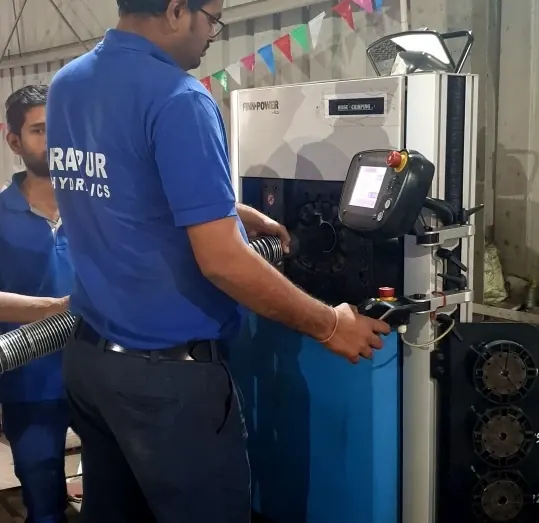
Real manufacturing. Documented over time.
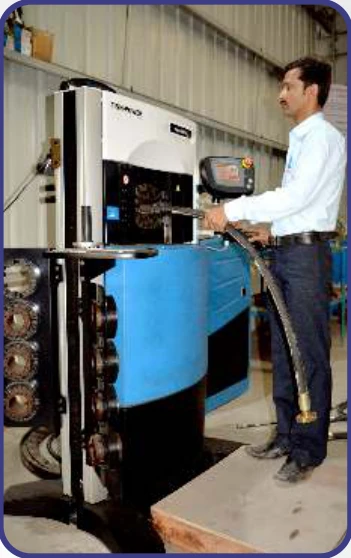
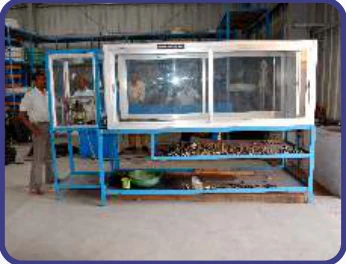
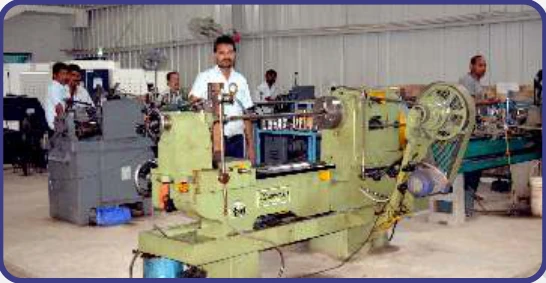
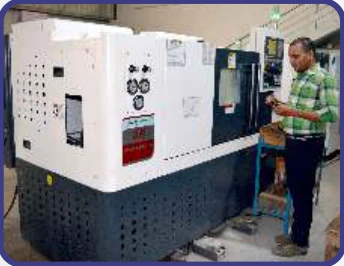
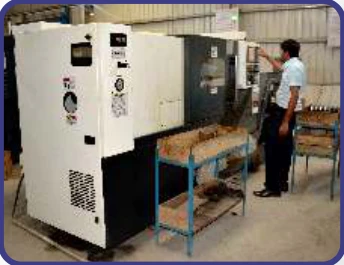
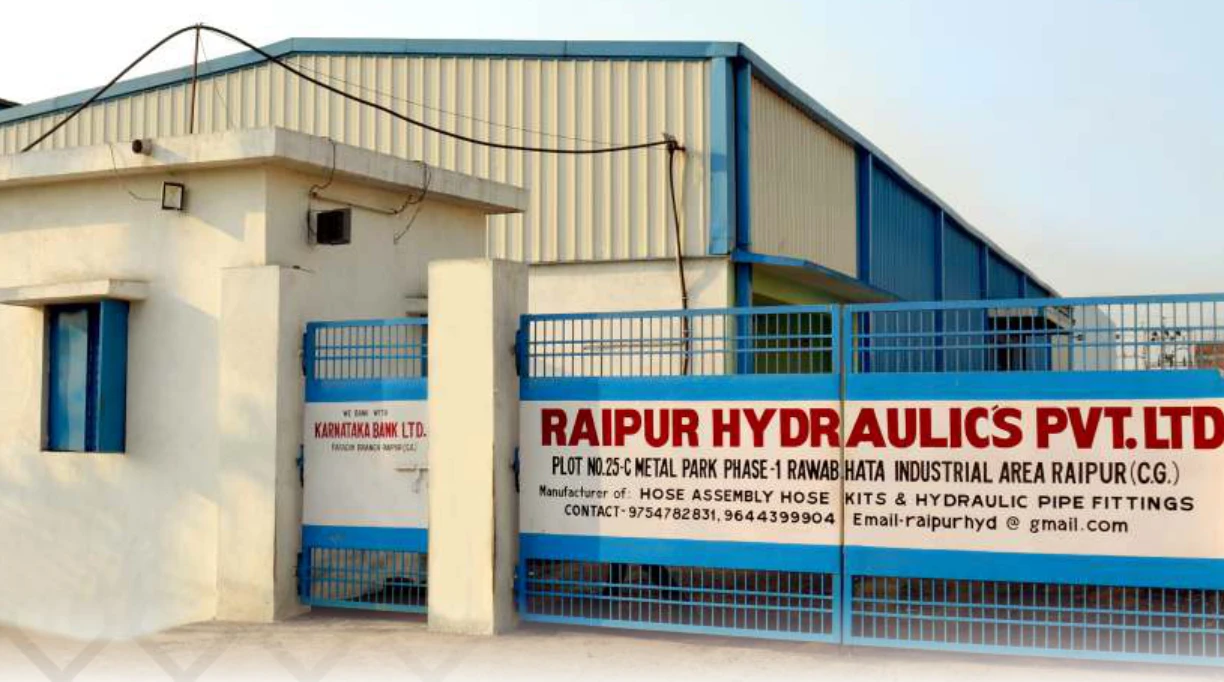
Photographs from RHPL’s older company brochure show its production and testing facilities. These are historical images; current equipment configuration and inspection scope are confirmed for each requirement.
Start with the application
Share the original reference, machine and circuit details, drawings or a measured sample. The review establishes the required hose, end connections, dimensions, orientation, protection and service conditions before the assembly is accepted for manufacture.
Prepare and assemble
The historical RHPL process includes fitting production and inspection, material preparation, hose cutting, fitting insertion and swaging or crimping. Skiving applies only where required by the selected system. The proposed hose and coupling combination must follow the applicable assembly specification.
Inspection is a defined order requirement
Agree the dimensional, visual and proof-pressure inspection scope in the order. Manufacturer hose qualification tests, such as impulse or ozone resistance, are distinct from acceptance checks on a finished assembly. Destructive burst testing is not a test applied to every assembly supplied.
Identification through to packing
Part or batch markings, end protection, cleaning and packing support traceability and handling. For kits, agree item tags, machine or circuit groups and packing identification against the accepted bill of materials.