
Thread Identification Chart: BSP, NPT, ORFS and JIC
Identify hydraulic fitting threads using diameter, pitch, taper and the sealing face. Compare BSP, NPT, ORFS and JIC connections with the chart and inspection steps in this guide.
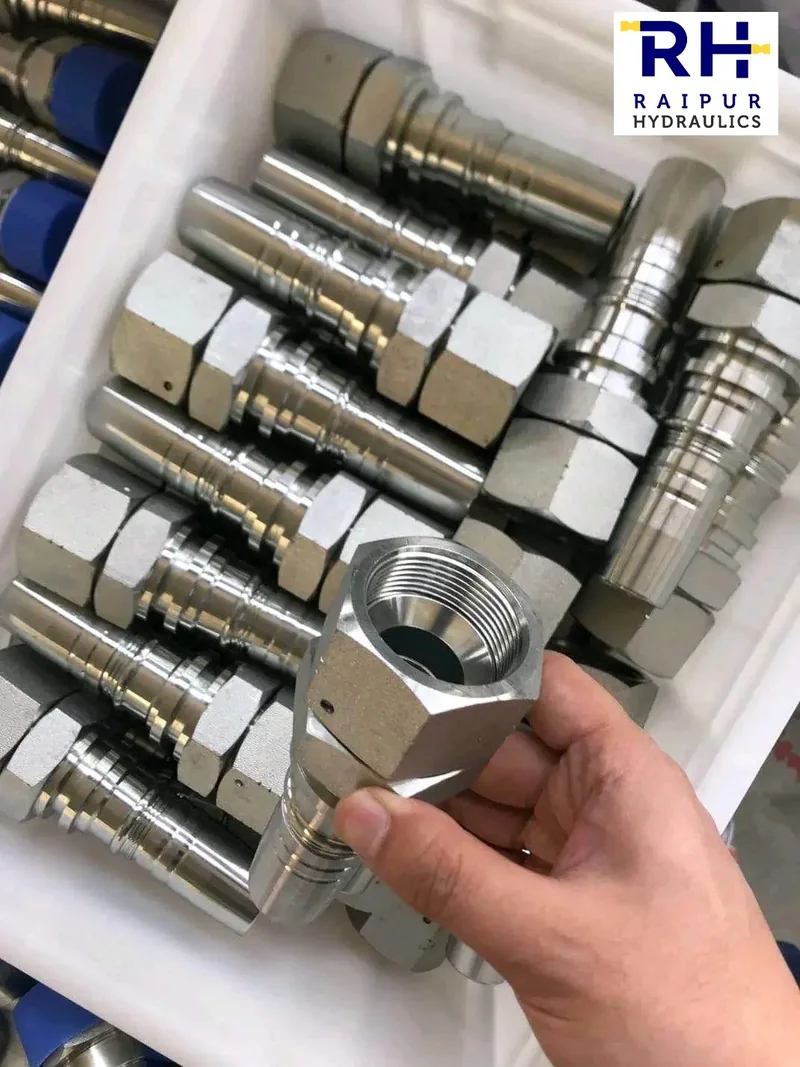
Quick Connection Identification Chart
| Family | Thread Form | Where the Seal Is Made | Key Check |
|---|---|---|---|
| BSPP | Parallel; 55° thread flank angle | Separate seat, O-ring or washer arrangement, depending on fitting design | Identify the actual sealing design |
| BSPT | Tapered male; 55° thread flank angle | Thread interface with the specified mating form and sealing procedure | Do not confuse with NPT |
| NPT | Tapered; 60° thread flank angle | Thread interface using the specified sealing procedure | Confirm diameter, pitch and taper |
| ORFS | Parallel unified thread | O-ring in the male fitting face against a flat mating face | Inspect the face and O-ring groove |
| JIC | Parallel unified thread | Mating 37° flare surfaces | Confirm the seat, not only the thread |
The thread flank angle and the sealing-seat angle describe different features. A BSP thread's 55° flank angle does not identify the cone used by a particular BSP hose swivel. Likewise, the JIC 37° designation concerns its flare seat. Keep these measurements separate in your inspection notes.
Start with a Safe, Clean Sample
Isolate the equipment and release stored hydraulic energy using its maintenance procedure before disconnecting anything. Label both ends and record the circuit reference. Clean the sample sufficiently to see the geometry without grinding, filing or reshaping a sealing surface.
Photograph the side profile, the threaded end and the seal area. Include a scale and clear markings where available. An overview of a dirty coupling rarely provides enough detail for a supplier to distinguish a cone seat from a face seal.
Measure Taper, Diameter and Pitch
Use a caliper to compare the diameter at several full threads. A parallel thread remains substantially constant, while a tapered thread changes along its length. Record how and where you measured, because a tapered-thread reading depends on the measurement position.
Measure the male thread outside diameter or the female opening as appropriate, then use a thread pitch gauge. Record threads per inch for the relevant inch thread, or millimetre pitch for a metric thread. Match the observations against a current identification table; nominal pipe size is not simply the measured thread diameter.
If more than one candidate remains, retain all the measurements and inspect the sealing geometry. Do not choose the nearest-looking entry to finish the paperwork. Worn threads and incomplete measurements are reasons to request a sample review.
Confirm the Seat and Mating Connection
Use a suitable seat gauge when the connection seals on a cone. For a face seal, inspect the flat face and groove position. An O-ring near a port shoulder is a different arrangement from an O-ring on an ORFS face. Examine both mating components rather than classifying only the loose hose end.
Check whether the fitting is male or female, fixed or swivel, straight or angled. A swivel nut can assist installation without making the assembly suitable for continuous rotation. Record the hose-side requirement separately from the machine-side thread.
Avoid the Common Ordering Errors
BSP and NPT are not interchangeable. Similar diameter or partial engagement does not make their forms compatible. JIC and other flare systems can also appear alike, so do not infer the seat from a nut's appearance. Sealant cannot correct a mismatched cone or damaged flat face.
Prepare the enquiry with the identified connection family, measured dimensions, seat information and photographs. Keep uncertain interfaces flagged until the supplier and maintenance team resolve them. A correct chart narrows the search; the final component drawing and application requirements establish what should be supplied.
Frequently Asked Questions
Can BSP and NPT Fittings Be Connected Directly?
Do not treat them as interchangeable. Their thread forms differ; use a correctly specified adapter where a transition is required.
How Do I Distinguish ORFS From JIC?
ORFS uses a flat face and a face O-ring. JIC uses mating 37° flare seats. Confirm thread dimensions as well as the sealing geometry.
Does BSPP Seal on Its Threads?
Its parallel thread provides mechanical engagement. The fitting design uses a separate sealing arrangement, which must be identified.
Is a Photograph Enough to Identify an Unknown Fitting?
Photographs help, but diameter, pitch, taper and seal details may still be needed. Request a physical sample review if the connection remains uncertain.
Technical References
Consult the current product and equipment instructions for the proposed application. The references below support the general technical background; they do not validate an RHPL assembly.
Caterpillar, Volvo, Komatsu, Hitachi, Gates, Danfoss, Parker, Manuli and Swagelok are trademarks of their respective owners. RHPL is not affiliated with or endorsed by these brand owners. Brand and machine names are used only to identify compatibility. External manufacturer references provide general technical background and do not imply endorsement of RHPL products.