Mining-Duty Hose: Abrasion, Heat and Cover Protection
Learn how abrasion, heat, movement and routing affect hydraulic hoses in mining service. Compare protection choices and inspection needs as part of the complete assembly and installation.
Describe the Environment at the Actual Hose Location
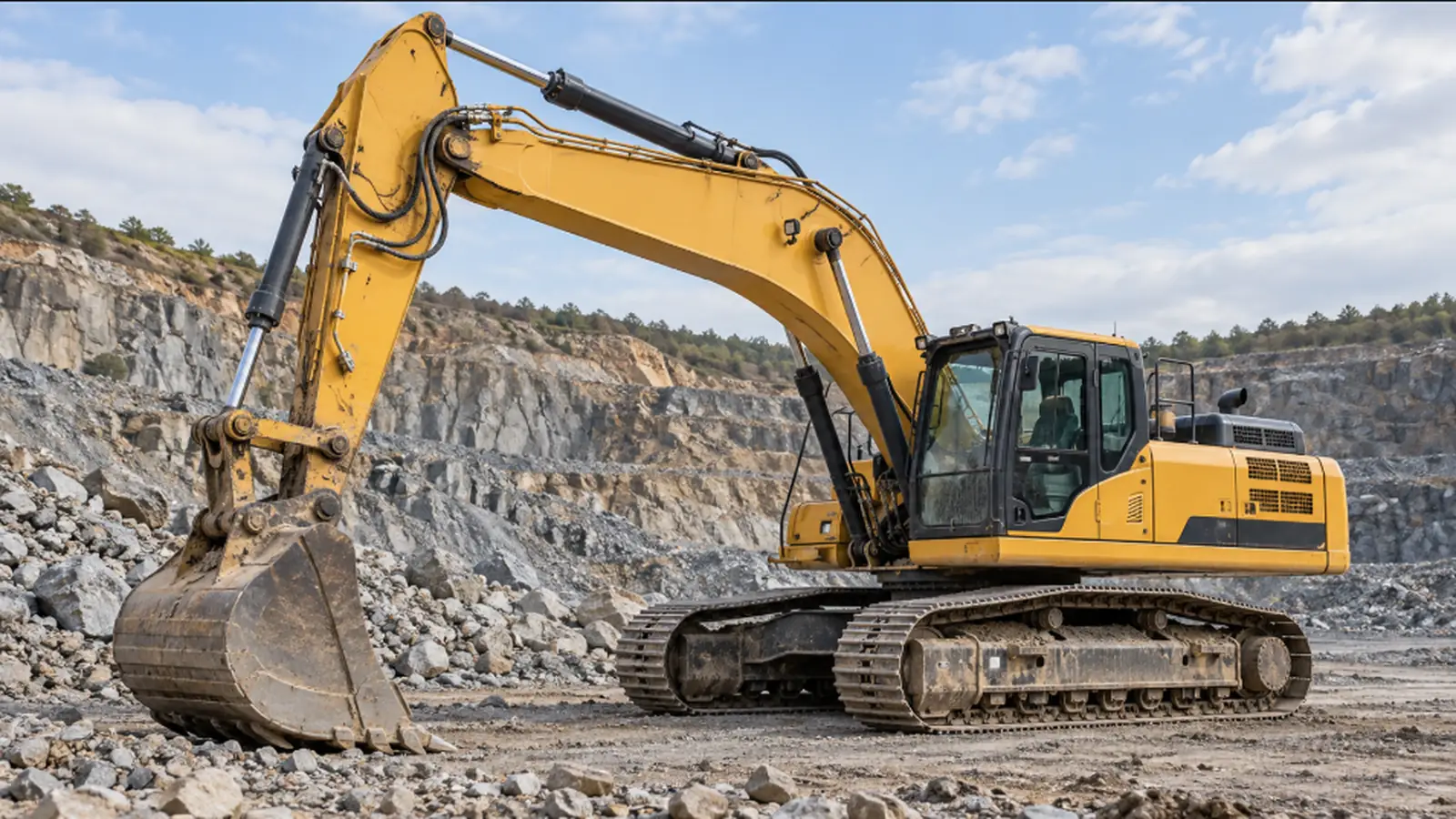
Start with the circuit and installation, not simply the word mining. An exposed attachment line, a line inside a warm engine compartment and a stationary plant hose face different hazards. Record where the assembly moves, what it can contact and how maintenance staff can inspect it.
For fleets using Caterpillar, Volvo, Komatsu or Hitachi equipment, identify the exact machine configuration and circuit privately with the enquiry. Manufacturer names help identify compatibility; they do not provide a universal hose specification. Modifications, attachments and routing changes need their own review.
Control Abrasion Before Adding Protection
Map rubbing points against guards, adjacent hoses, clamps and machine structure. Record the contact during the permitted movement envelope, with the machine secured and inspection performed under its maintenance procedure. A polished bracket or repeated wear mark can help locate a persistent problem.
Review clearance and support first. Then consider a hose cover selected for the exposure and suitable external protection. Compare abrasion claims only when the test method and conditions are stated. A laboratory improvement does not translate directly into a promised number of operating hours at a quarry.
After a routing change, retain photographs of the intended arrangement. This gives the next technician a reference and helps prevent a replacement from being installed along an old, damaging path.
Separate Fluid Heat From External Heat
Check the hose's permitted fluid temperature and compatibility for the actual hydraulic fluid. Also review exposure to engine components, exhaust areas and other heat sources. An acceptable ambient reading elsewhere on the machine does not establish conditions at the hose location.
Where shielding or a heat sleeve is needed, select it for the expected exposure and installation method. Review clearances and the surrounding machine design. External protection does not raise the inner tube's permitted fluid-temperature limit or make an overheated hydraulic system acceptable.
Choose Protection for the Problem It Must Address
| Option | Purpose to Evaluate | Installation Check |
|---|---|---|
| Abrasion Sleeve or Wrap | Reduce external rubbing and cuts | Fit, coverage and inspection access |
| Spring or Spiral Guard | Help resist mechanical contact where suitable | Clearance, movement and retained debris |
| Heat Sleeve or Shield | Limit the specified external heat exposure | Material rating and installation geometry |
| Purpose-Designed Containment Sleeve | Address a defined fluid-release hazard | Documented function and fitting instructions |
These functions are not interchangeable. Do not assume that an ordinary abrasion sleeve contains a burst or protects a person from fluid injection. Select containment measures from documented performance and the site's risk assessment. Any guard must work with the required flexibility and access.
Account for Site Requirements and Maintenance
Some sites specify flame resistance, electrical properties or other requirements for particular locations. Confirm the applicable requirement and evidence for the proposed product. A general description such as mining-duty is not documentation of compliance with every site's rules.
Include protection in the inspection plan. Look for displacement, damage, trapped material and wear at clamps. Protection can obscure the hose, so provide a safe inspection method rather than assuming the covered section remains sound indefinitely.
Prepare the Replacement Around the Complete Duty
Send the assembly reference, machine configuration, circuit, quantities and delivery destination. Include the exposure map, photographs and failure history. Share operating and dimensional details privately for engineering review.
For a planned kit, identify which circuits need different protection or inspection access. Record the accepted arrangement with installation instructions and item identification. This makes the kit useful to maintenance staff without treating every hose on the machine as if it experiences the same conditions.
Frequently Asked Questions
Does an Abrasion-Resistant Cover Eliminate Hose Wear?
No. Persistent rubbing, incorrect support and poor routing still need correction. Cover selection is one part of the installation.
Will a Heat Sleeve Increase the Hose's Fluid-Temperature Rating?
No. Select the hose for its permitted fluid conditions and use external protection for the separately defined exposure.
Is Every Protective Sleeve a Burst-Containment Sleeve?
No. Abrasion, heat and containment products have different functions. Verify documented performance for the intended hazard.
What Details Help Specify a Mining Hose Kit?
Provide machine configuration, circuit references, quantities, exposure, movement and maintenance history. Share drawings and operating specifications privately.
Technical References
Consult the current product and equipment instructions for the proposed application. The references below support the general technical background; they do not validate an RHPL assembly.
Caterpillar, Volvo, Komatsu, Hitachi, Gates, Danfoss, Parker, Manuli and Swagelok are trademarks of their respective owners. RHPL is not affiliated with or endorsed by these brand owners. Brand and machine names are used only to identify compatibility. External manufacturer references provide general technical background and do not imply endorsement of RHPL products.