Fitting Re-Use Guide: What Can Be Reused Safely?
Understand the difference between permanent crimped ends, reusable fittings and separate adapters. Learn which items are discarded and which need manufacturer instructions and condition checks before reuse.
First Identify Which Connection You Mean
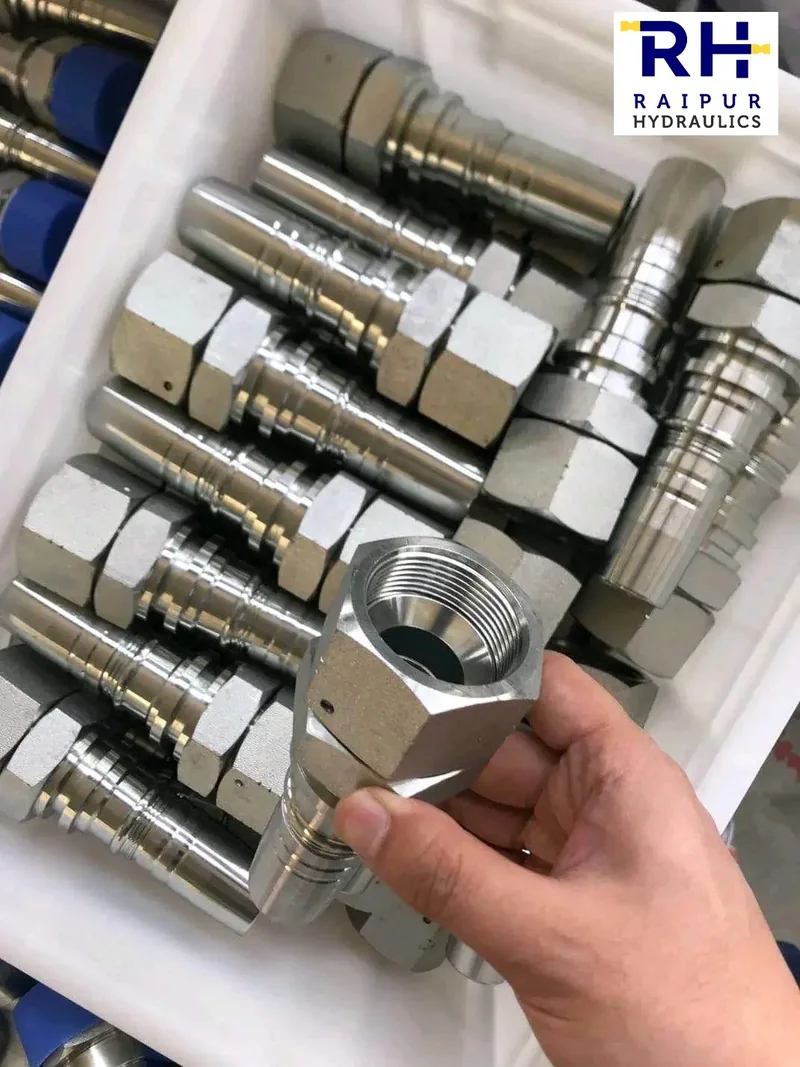
A hydraulic assembly has a hose-retention connection and a machine-side connection. A threaded swivel can be disconnected from the machine while the hose end remains permanently attached. That detachable thread does not make the crimped stem or ferrule reusable.
Separate adapters are another category. They connect interfaces without forming the hose-retention joint. Discuss the specific component with the workshop before deciding whether a request to reuse a fitting means retaining an adapter, reconnecting an intact assembly or recovering a hose end from a failed assembly.
Do Not Recover Permanent Crimped or Swaged Ends
Replace permanent hose ends when manufacturing a replacement assembly. Do not cut away the ferrule, recover the stem and treat it as new material for another hose. Permanent attachment involves a controlled deformation and an interface whose condition cannot be established by appearance alone.
The hose, fitting and assembly process must be the specified combination. A matching machine thread or an apparently undamaged nipple does not establish the required retention performance. Recrimping a damaged joint, welding a cracked fitting or patching the hose is not a substitute for replacement.
Keep a failed assembly available for investigation when practical. Its usefulness as evidence does not make its components suitable for reuse.
Purpose-Designed Reusable Fittings Need Explicit Instructions
Some hose systems use fittings intended for field attachment and potential reuse. Identify the exact fitting family and the hose combinations permitted by its manufacturer. The label reusable is not a blanket statement that every used component passes inspection.
Follow the disassembly, inspection and reassembly instructions, including component replacement requirements. Check threads, sealing surfaces, hose-retention features and any specified gauges. Reject fittings with cracks, distortion, significant corrosion or damaged functional surfaces. If the identity or service history is uncertain, use a new correctly specified component.
A fitting that has blown or pulled off a hose should not be reused. Also do not attach fittings to a previously used hydraulic hose to create a replacement assembly. The workshop needs a documented system and acceptable components, rather than an improvised recovery of available parts.
Assess Separate Adapters and Machine Ports Independently
A separate adapter may remain suitable for service if its manufacturer's instructions permit it and qualified inspection confirms its identity, condition and application. This is a conditional assessment, not automatic acceptance because the part did not leak before removal.
Inspect the mating port as well. Damaged threads, a marked cone or a distorted flat face can compromise the joint even with a new hose assembly. Replace seals as specified and use the correct material. More tightening or sealant cannot restore a damaged sealing surface.
Record which components were retained and which were replaced. That distinction helps a later investigation locate the actual interfaces rather than treating the new hose as the only changed part.
A Workshop Decision Checklist
- Identify the component and its manufacturer instructions.
- Classify it as a permanent hose end, purpose-designed reusable fitting or separate adapter.
- Review service history and the reason for removal.
- Inspect the functional surfaces and reject uncertain or damaged parts.
- Confirm the permitted hose, connection and assembly combination.
- Complete the specified assembly checks and keep the record.
If a step cannot be completed, flag the component for replacement or further technical review. Pressure testing alone does not authorise reuse that the component instructions prohibit.
Specify the Replacement Clearly
For a maintenance enquiry, send the assembly reference, end photographs, circuit and required quantity. State whether a machine adapter is intended to remain in place. Share measurements and operating details privately so that the hose and retained interface can be reviewed together.
During urgent repairs, the economic comparison should include downtime and the consequences of another failure. Keep the workshop decision traceable. The appropriate result may be a new assembly with an inspected retained adapter, but it should never rest on the assumption that every detachable connection is reusable.
Frequently Asked Questions
Can I Reuse a Crimped Hose Nipple with a New Ferrule?
Do not recover a permanent crimped or swaged hose end for a new assembly. Use new components in the specified hose-and-fitting system.
Does a Swivel Nut Make a Hose Fitting Reusable?
No. The swivel describes the machine-side connection. The hose-retention end may still be permanently crimped.
Can a Field-Attachable Fitting Be Reused After It Pulls Off?
No. Do not reuse a fitting that has blown or pulled off a hose. Investigate the failure and replace the affected components.
Can an Undamaged Separate Adapter Be Retained?
Potentially, if the manufacturer's instructions permit it and qualified inspection confirms its suitability. Inspect the mating interface and replace seals as specified.
Technical References
Consult the current product and equipment instructions for the proposed application. The references below support the general technical background; they do not validate an RHPL assembly.
Caterpillar, Volvo, Komatsu, Hitachi, Gates, Danfoss, Parker, Manuli and Swagelok are trademarks of their respective owners. RHPL is not affiliated with or endorsed by these brand owners. Brand and machine names are used only to identify compatibility. External manufacturer references provide general technical background and do not imply endorsement of RHPL products.